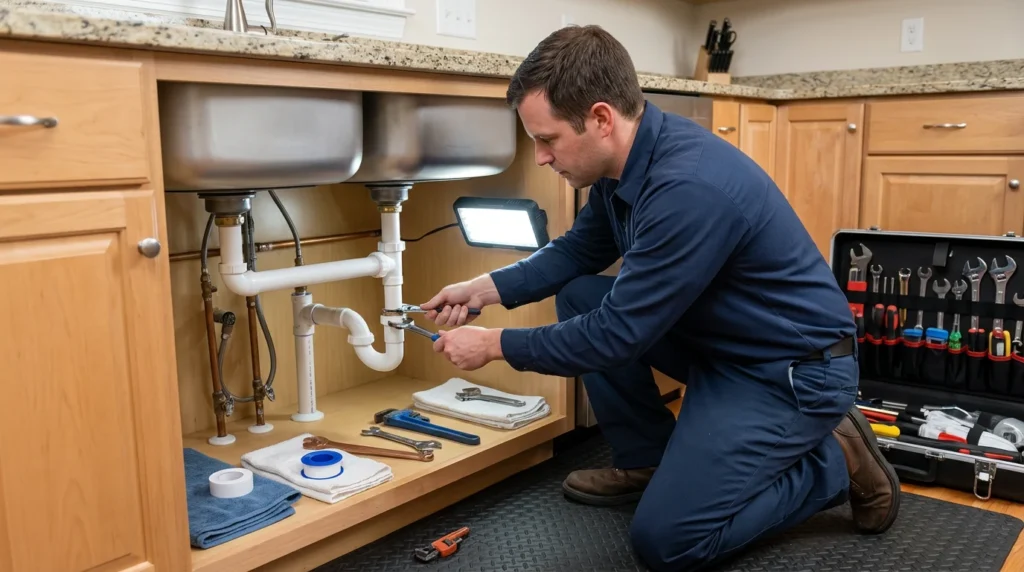
Quick answer: Call a plumber who can locate the leak, stop the water damage fast, and make a code-compliant repair—not just patch the symptom. For active leaks, shut off the nearest valve (or the main), mop up standing water, and take photos for your records. Choose a provider who explains the likely cause, offers repair-versus-replace options, and tells you how they’ll confirm the leak is actually resolved.
First Steps Before the Plumber Arrives
If you see dripping, pooling, or a sudden drop in water pressure, act quickly. Shut off the closest fixture valve (under a sink or behind a toilet). If you can’t isolate it, shut off the home’s main water valve. Then open a faucet at the lowest level of the home to relieve pressure and slow the leak. Move valuables, place towels or a bucket, and avoid using electrical outlets near wet areas.
If you’re searching for leak repair Athens GA, gather a few details before you call: where you first noticed water, whether it changes when fixtures run, and any recent work done (new faucet, water heater service, irrigation changes). Photos of the wet area, ceilings, or flooring help too. If the leak is near a water heater, turn off the heater’s power (breaker for electric, control to “pilot/off” for gas) after shutting off the water supply.
Quick Triage: What You Can Check vs What Requires a Call Now
Some checks are low-risk if you can safely access the area and you’re not dealing with active spraying water. If anything is actively leaking from a supply line, behind a wall, or near electricity, treat it as urgent.
Simple triage table
DIY-safe checks (stop if you see active spraying or can’t reach valves safely)
• Toilet running: put a few drops of food coloring in the tank; if color shows in the bowl after 10–15 minutes, the flapper may be leaking. Shut off: toilet angle stop (small valve behind/near toilet).
• Under-sink drip: dry everything and watch for fresh moisture at the trap, supply connections, and faucet body. Shut off: hot/cold stop valves under the sink.
• Water meter test: turn off all fixtures, then watch the meter’s leak indicator/triangle (or note the reading) for 10–20 minutes; movement suggests a leak somewhere. Shut off: none for the test; use main if you find active leakage.
Call now scenarios
• Active supply leak (steady stream/spray), burst hose, or leaking water heater connections. Shut off: main water valve; then shut off water heater supply; cut power to heater if safe.
• Ceiling bulge, sagging drywall, or water dripping from light fixtures. Shut off: main water valve; avoid switches/outlets in the wet area.
• Suspected slab leak (water sound with everything off, warm/wet spot on floor, unexplained meter movement). Shut off: main water valve if you can; limit water use until assessed.
Athens-Specific Tips for Older Homes, Restoration, and Georgia Licensing
In parts of Athens, older homes can have main shutoffs that are painted over, tucked behind water heaters, or located in a crawlspace. If you can’t find it quickly, check where the water line enters the house (often near the front or a utility area). Outside, some properties have a curb stop near the street; it’s best to leave curb-stop operation to the water utility or a plumber because forcing it can break the valve or box.
If water has soaked drywall, insulation, or flooring for more than a short time, or you see swelling, buckling, or musty odor, consider involving a water restoration company for drying and dehumidification. Leak repair stops the water source; restoration focuses on drying materials and reducing the chance of ongoing damage. For insurance purposes, take photos early and keep notes on when you discovered the leak and what you shut off.
In Georgia, “licensed plumber” generally refers to a state-issued license level (commonly Journeyman or Master Plumber) held by the person doing or supervising the work. You can ask who will be on-site, what license level they hold, and whether permits are required for the scope (for example, some water heater or repipe work may trigger permitting). If you want extra peace of mind, ask for the license number so you can verify it through the state’s licensing resources.
How to Choose the Right Leak Repair Approach
A good repair fixes the cause, not just the wet spot. For example, tightening a fitting might solve a simple connection leak, but recurring leaks can mean a damaged pipe end, corrosion, or movement that needs a more secure connection. Methods vary by leak type and access, so ask what the plan is before walls or ceilings are opened.
A plumber may use steps like isolating sections, checking pressure, and using noninvasive tools (such as acoustic listening, moisture readings, or thermal imaging) to narrow down a hidden leak. Ask whether they can explain how they confirmed the source and how they’ll verify the repair afterward (for example, running fixtures, rechecking pressure, or visually confirming the area stays dry). If water has reached drywall, insulation, or cabinetry, plan on drying and possibly removing affected materials—leak repair addresses the plumbing, but moisture control prevents lingering odors and damage.
Repair vs replace rule-of-thumb
• Lean toward repair if it’s a single accessible fitting, valve, or supply line failure and the surrounding pipe looks sound.
• Lean toward replacement of a longer section if you’ve had repeated pinhole leaks, multiple failures on the same run, visible corrosion, or brittle/aged materials (galvanized steel in particular can be prone to internal corrosion over time).
• If a previous patch failed, ask what changed—pressure issues, pipe movement, or underlying corrosion can make repeat leaks more likely unless the root cause is addressed.
Call checklist (what to document and answer)
• Photos: the wet area, any staining/bubbling paint, under-sink connections, water heater base, and the water meter reading/indicator if relevant.
• Meter steps: with all water off, note the meter reading and recheck after 10–20 minutes; tell the plumber whether it moved.
• Questions to answer: when you first noticed it, whether it worsens when fixtures run, any recent plumbing work, and whether you can shut off the main and fixture stops.
Questions to Ask and When to Call Immediately
Good questions include: Where exactly is the leak coming from? What failed and why? Is this a spot repair or does it suggest broader pipe wear? Will you need to open a wall or ceiling, and how will you minimize the opening? What should I watch for over the next 24–48 hours (pressure changes, new stains, slow drains)? Clear answers help you avoid repeat problems.
Call immediately if you have water near electrical panels or outlets, a ceiling bulge that looks ready to release water, a suspected slab leak (warm spots on the floor, unexplained water sounds, fast meter movement), or any leak you can’t isolate with a shutoff valve. For local help diagnosing and repairing leaks with a straightforward plan, contact Blueprint Plumbing Services LLC.