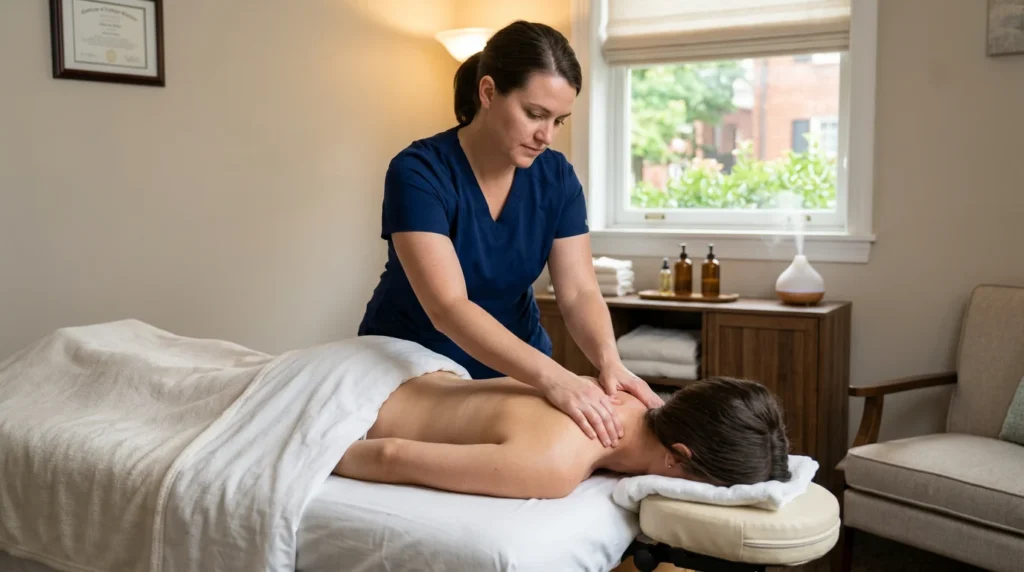
Quick answer: A “signature therapeutic” massage usually blends targeted problem-solving work with calming, full-body techniques so you get relief without feeling overly worked. Expect a short intake about pain spots, injuries, and pressure preferences, then focused time on your main complaint (often neck/shoulders or low back/hips), plus broader integration. Many sessions add trigger-point work, gentle stretching, and brief aftercare guidance.
What “Signature Therapeutic” Typically Means
In most massage menus, “signature therapeutic” signals a customized session instead of a one-style routine. The therapist usually combines therapeutic techniques (for stubborn knots, limited mobility, or repetitive-strain tightness) with relaxation-focused strokes so you leave looser without feeling beat up. If you’re comparing options like signature therapeutic Lexington KY, the biggest clue is the word “therapeutic”: the goal is measurable relief, not just a spa-like experience.
Across the industry, a typical session flow often looks like: a brief intake of about 2–5 minutes, hands-on assessment in the first few minutes, then roughly 15–30 minutes focused on your top one or two problem areas, followed by full-body integration work for the remainder. Many therapists also reserve about 1–3 minutes at the end for aftercare suggestions (like heat vs. ice, gentle movement, or hydration habits). Those ranges are general norms, not a promise of what any one Lexington studio does.
Most sessions include at least some full-body work, even if the main focus is one or two areas. Tightness often travels: a “neck problem” can be driven by shoulders, jaw tension, or mid-back stiffness, and low-back discomfort can be tied to hips, glutes, and hamstrings.
Common Techniques and What They’re For
Therapeutic sessions often mix a few methods depending on your goals. Deep pressure can help with dense muscle tension, but depth isn’t automatically better; slow, specific work usually matters more than force. Trigger-point therapy targets small, tender knots that can refer discomfort elsewhere (like shoulder points that contribute to head and jaw tension).
You may also see myofascial techniques, where the therapist works more gradually to reduce the “stuck” feeling in tissues, especially around the upper back, hips, and calves. Gentle stretching or range-of-motion movements can be included to help your body keep the change once you stand up and start moving again.
To compare “therapeutic” versus “relaxation” offerings on Lexington-area menus, scan the description for cues. “Relaxation” usually emphasizes long, flowing strokes and consistent pressure. “Therapeutic” usually mentions focused work, problem areas, trigger points, mobility, or specific goals like reducing tension headaches or improving range of motion.
Lexington and Kentucky Basics to Look For
In Kentucky, you can reasonably expect a massage therapist offering professional services to be licensed, and it’s normal for them to ask a few intake questions before starting. A solid intake is usually simple: where you hurt, what movements aggravate it, what pressure you prefer, and any recent medical changes that could affect safety.
Privacy and consent should be standard in Lexington: you should be draped appropriately, told how to get on the table, and asked before sensitive areas are addressed. You should also feel comfortable declining work on any region. If a “signature” service is described vaguely, ask how they decide what techniques to use and how they handle feedback mid-session.
For apples-to-apples comparisons across local studios, ask three practical questions: “How much of the session can be dedicated to my main issue?” “Do you treat this as a full-body session with a focus, or only spot work?” and “What should I expect to feel later today and tomorrow?” Clear answers usually matter more than the exact name of the service.
Safety and When to Pause Before Booking
Massage is generally low-risk for many people, but it’s smart to pause and ask first if anything medical is going on. Talk with your clinician and your massage therapist before a session if you’ve had a recent injury or surgery, you’re taking anticoagulants (blood thinners), you have a fever or active infection, you suspect a blood clot (for example, new unexplained calf swelling/warmth), or you’re pregnant and unsure what modifications are appropriate.
During the session, speak up if anything feels sharp, burning, or like tingling/numbness. Productive therapeutic work can feel intense, but it shouldn’t feel alarming. Afterward, mild tenderness can happen; worsening pain, spreading numbness, or swelling are good reasons to stop self-treating and check in with a clinician.
If you’re calling around Lexington to find the right fit, keep a short checklist: confirm licensure, ask how intake and draping work, describe your main goal in one sentence, and ask how they’ll structure the time (focus vs. full-body). You can use that same checklist when contacting Corey Proffitt Studios Massage.