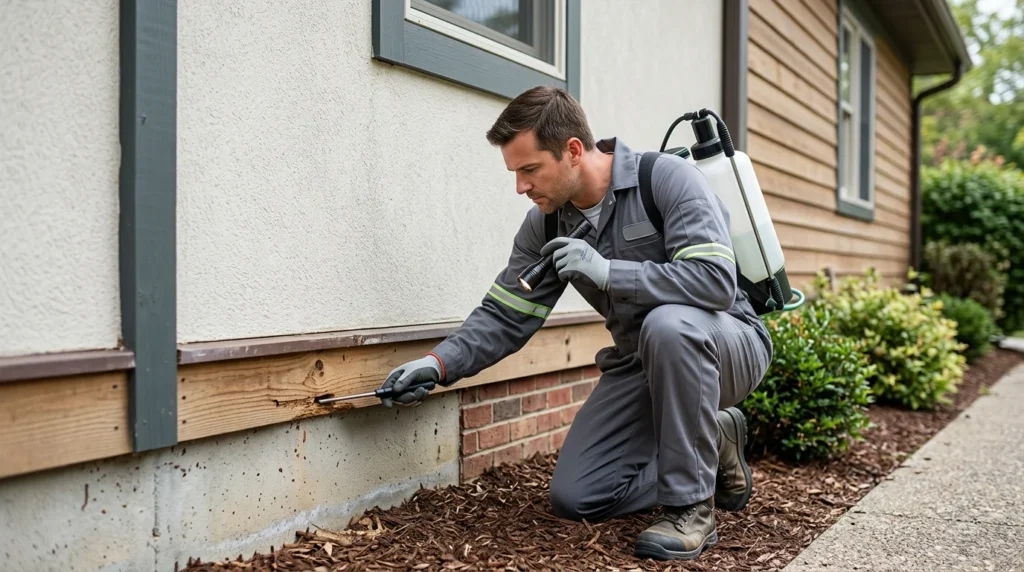
Quick answer: Termite protection services usually combine an inspection, a plan to stop active termites (if found), and ongoing prevention to reduce the chance of future damage. Many providers check for mud tubes, damaged wood, moisture issues, and entry points, then recommend either a liquid soil treatment, bait stations, or both. Most plans also include periodic re-inspections and written documentation of findings and treatment areas.
What a Typical Visit Looks Like
A standard termite protection appointment starts with a careful inspection of the home’s perimeter and key interior areas like crawl spaces, basements, and garages. Inspectors commonly look at foundation walls, sill plates and band/rim joists, porch and garage slab edges, expansion joints, and plumbing penetrations where termites can travel unseen. The goal is to find evidence of activity (mud tubes, damaged wood, swarmers), conditions that attract termites (wood-to-soil contact, moisture), and spots where treatment will be most effective.
After the inspection, you should receive a plain-language explanation of what was found and what wasn’t, plus a recommended approach. If you’re comparing companies in Athens, ask what the inspection covers, how treatment areas are mapped, and how follow-up is handled under their termite protection services plan.
“Mapping” usually means a diagram or notes showing where evidence was observed, where liquid was applied (for example, along specific foundation runs or drilled slab sections), and/or where bait stations are placed and numbered for future checks. Good providers also point out non-chemical fixes that make treatments work better, like improving drainage, repairing leaks, and keeping mulch or stored lumber away from the foundation.
Common Treatment Options and How They Work
Most termite protection plans use one of two methods: liquid barrier treatments, bait systems, or a combination. A liquid treatment is applied to soil along the foundation and around structural entry points so termites encounter it as they travel. This approach is often chosen when immediate protection around the structure is the priority, especially where termites can access soil next to the foundation.
Bait stations are placed in the ground around the home and monitored over time. Termites feed on the bait and share it within the colony, which can reduce colony pressure. Baits can be a good fit where drilling or heavy trenching is undesirable, but they rely on consistent monitoring and maintenance to stay effective.
In some situations, a provider may recommend both: a liquid treatment for the structure and baits for ongoing monitoring. Ask what product category is being used, where it will be applied (soil perimeter, slab drill points, crawl space piers), and what you should expect to see during follow-up visits.
What to Confirm in Writing
Before you enroll, get the key terms in writing so you can compare plans fairly. A clear agreement prevents surprises later if the home changes or access becomes limited.
Confirm: inspection scope (including crawl space, sill plates, slab edges, and penetrations), treatment type (liquid, bait, or both) and where it will be installed, re-inspection schedule (annual is common; higher-risk homes may be checked more often—ask what schedule your plan uses and why), what documentation you’ll receive (diagram/mapping, station log, photos if provided), warranty/retreatment triggers (what evidence qualifies, how callbacks are requested), and homeowner responsibilities (keeping stations accessible, maintaining clearance in crawl spaces, avoiding covering treated soil with deep mulch).
What Ongoing Protection and Re-Inspections Should Cover
Termite protection is rarely a one-and-done service. Many plans include periodic re-inspections—annual is common, and some homes are checked more often based on risk factors like persistent moisture, heavy vegetation against the foundation, or a history of activity. Ask what interval your plan uses, what changes would prompt a shorter interval, and how missed visits are handled.
Documentation matters. You should be able to get a written report showing any evidence found, areas treated, station locations (if applicable), and recommended repairs or prevention steps. Also ask what conditions can compromise a treatment zone over time, such as grading changes that bury the foundation, deep mulch that bridges the treated soil, new decks or additions that cover access points, or trenching for utilities that disturbs treated areas.
If you’re considering service in Athens, GA, Athens Exterminating can walk you through options and paperwork expectations. Request the inspection checklist and sample report before enrolling.