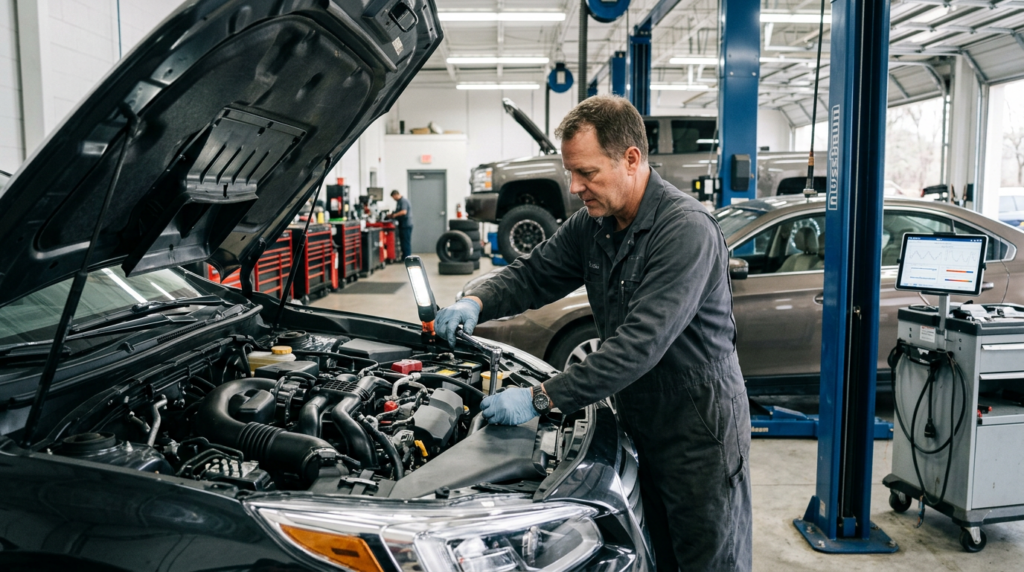
Quick answer: Choose a reliable shop by looking for clear communication, accurate diagnostics, and written estimates before work starts. Ask what tests they’ll run, what parts they plan to use, and whether they’ll show you the old parts after the repair. Check that they explain priorities (safety now vs. maintenance later) and give a realistic timeline, then confirm the warranty terms in plain language.
What to Look For Before You Hand Over the Keys
A good shop makes the process predictable: they listen to your symptoms, ask a few clarifying questions (when it happens, hot vs. cold, speeds, warning lights), and explain what they’ll check first. If you’re searching for an auto repair shop Cumming GA drivers can trust, focus on how they communicate, not just how fast they can get you in.
Ask for a written estimate that separates labor from parts and includes shop supplies or diagnostic fees up front. Clear estimates reduce surprises and make it easier to compare options. You should also feel comfortable asking: “What would you fix first if this were your car?” A reliable shop can rank repairs by safety, preventing breakdowns, and comfort items.
Pay attention to how they handle uncertainty. Some problems require step-by-step testing. The right approach is to explain the plan (“we’ll confirm fuel pressure, check for vacuum leaks, then verify sensor data”) and call you before any additional work beyond the estimate.
Cumming-Specific Ways to Vet a Shop
Do a quick consistency check across listings before you call. The shop name, street address, and phone number should match across maps, the website, and directory profiles. Mismatches can be harmless, but they can also signal an outdated listing or a business that’s hard to reach when you need warranty follow-up.
Scan recent reviews for patterns, not star averages. Look for repeated mentions of clear estimates, updates before extra work, and whether the final invoice matched the approved amount. A few complaints can happen anywhere; repeated notes about surprise charges or poor communication are more actionable.
For authorizations, set expectations clearly. In Georgia, customers commonly expect to approve the estimate before work starts and to be contacted if the scope changes. Ask the shop to note your “do not exceed” dollar amount and to get your approval before any additional diagnostics or parts are added.
Call Script / Checklist (5 Minutes)
Use this short script to compare shops quickly. Each item has a pass/fail signal you can listen for:
- Written estimate? Pass: “Yes, we’ll send or print a line-item estimate.” Fail: “We’ll just take care of it and let you know later.”
- Diagnostic plan? Pass: “We’ll test X and Y first, then call with results.” Fail: “We’ll start replacing likely parts.”
- Authorization policy? Pass: “No additional work without your approval.” Fail: “We’ll proceed if we think it needs it.”
- Warranty terms explained? Pass: clear time/mileage coverage for parts and labor. Fail: vague “we stand behind it” with no details.
- Parts options? Pass: OEM/equivalent/premium options explained with pros/cons. Fail: won’t say what parts they use.
- Old parts available? Pass: “Yes, we can show/return them if you ask.” Fail: refuses or dodges the question.
- Timeline and updates? Pass: realistic timeframe and how they’ll update you. Fail: no timeframe or no commitment to call.
Red Flags and How to Make the Visit Go Smoothly
Red flags include pressure to approve work immediately, vague estimates (“we’ll see what it needs”), and explanations that don’t match the symptom. Be cautious if a shop won’t describe the diagnostic steps or won’t tell you what they tested. Another warning sign is repeatedly replacing parts without a clear reason the previous repair didn’t solve the problem.
Help the shop help you by bringing details: photos of warning lights, notes on when the issue happens, and any recent work done. Mention odd smells, noises, or changes in fuel economy, and tell them if the problem started after hitting a pothole or after a battery replacement.
If you’d like to talk through your symptoms and request an estimate, contact Team Ryan Automotive.