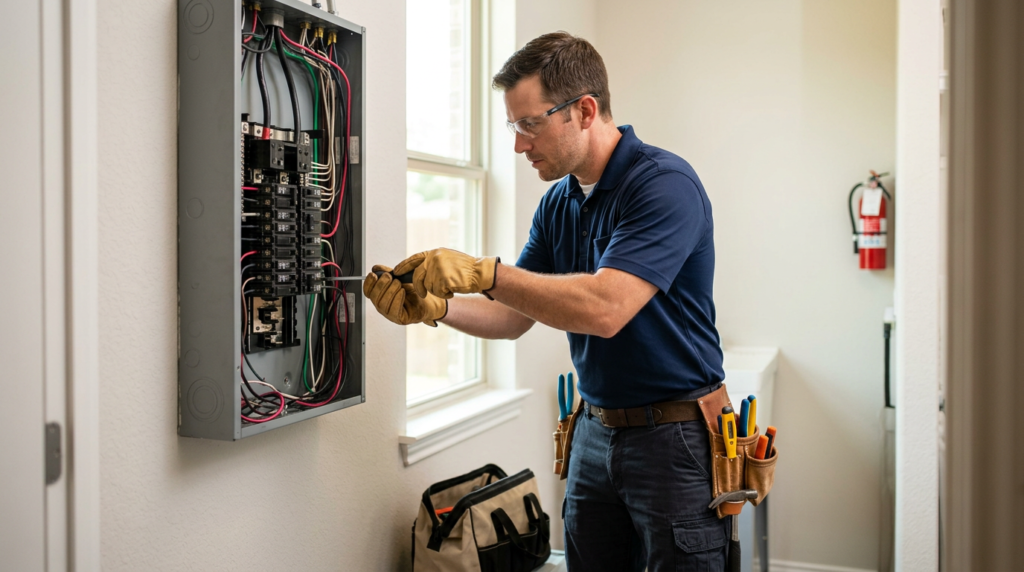
Quick answer: Homeowners often call an electrician for panel and breaker troubleshooting, outlet and switch repairs, lighting installs, ceiling fans, GFCI/AFCI protection, surge protection, and help after storms or power issues. A licensed pro can also handle service upgrades, dedicated circuits for appliances, EV chargers, and code-correct fixes for unsafe wiring, improving safety and reducing nuisance trips and flickering.
Common Calls: From Flickering Lights to New Circuits
In most homes, electrical work falls into two buckets: fixing something that’s acting up and adding power where you need it. Homeowners commonly call for breakers that trip repeatedly, outlets that stop working, warm or buzzing switches, lights that flicker when an appliance starts, and outdoor receptacles that quit after rain. Installation work often means new lighting, ceiling fans, under-cabinet lights, landscape lighting transformers, and new receptacles in garages, patios, and home offices.
For bigger upgrades, homeowners often ask for dedicated circuits for microwaves, refrigerators, freezers, workshops, or pool equipment, plus service changes like panel replacements, meter-base issues, or adding a whole-home surge protector. If you’re comparing providers for electrical services bulverde tx, ask whether they’ll walk you through load calculations, circuit labeling, and what will be brought up to current code versus left as-is.
Safety-related tasks are also common: replacing damaged receptacles, correcting reversed polarity, installing GFCI protection near sinks and outdoors, and adding AFCI protection where required. These aren’t “nice-to-haves”—they address shock and fire risks that can hide behind a faceplate.
Warning Signs That Mean “Call Now”
Some symptoms should move you from “I’ll get to it later” to “get it checked.” Burning smells, scorch marks on outlets, crackling sounds, repeated breaker trips, or a breaker that won’t reset can indicate overheating, arcing, or a failing device. Dimming lights paired with a buzzing panel can point to a loose connection, which is a common cause of heat buildup.
If only part of the house loses power and breakers look normal, you might have a failed GFCI upstream, a loose neutral, or a problem at the service equipment. A loose neutral can create unusual behavior—lights brightening in one area while dimming in another—and should be treated as urgent.
After storms, watch for water in exterior boxes, tripped GFCIs that won’t reset, or damage to overhead service lines. Don’t touch downed lines or service equipment that looks compromised; shut off power if you can do so safely and call a professional.
Upgrades That Add Capacity and Reduce Headaches
As homes add more high-demand loads—EV chargers, larger HVAC equipment, induction ranges, hot tubs, and workshop tools—capacity planning matters. A typical path is adding a dedicated circuit first; if the panel is full or undersized, a panel upgrade or a subpanel may be the next step. A good electrician will also check grounding and bonding, since those details affect both safety and how well surge protection works.
Whole-home surge protectors are often recommended because they help clamp down voltage spikes from utility switching or nearby lightning. They don’t replace point-of-use surge strips for sensitive electronics, but they can reduce the wear-and-tear surges that slowly damage appliances.
If you’re remodeling, ask about lighting layouts, dimmer compatibility (especially with LEDs), and placing outlets where furniture and TVs will actually go. Planning these early usually avoids patchwork fixes later.
Permits, Codes, and What to Ask Before You Schedule
Code and permit rules vary by municipality, county, and utility service territory, even within the same region. Electricians generally work to the National Electrical Code (NEC) as adopted and amended locally, and inspectors enforce the version your jurisdiction has adopted. Work involving the service equipment (meter base, service conductors, main panel changes), adding new circuits in some situations, or installing equipment like EV chargers may require permits and inspections—your electrician should confirm what applies where you live.
Before you call, gather a few details: what exactly happened (and when), which rooms are affected, whether a breaker or GFCI tripped, and what large loads were running. If you can do so safely, take photos of the panel directory, the breaker positions, and any visible damage or scorching.
Use this checklist to choose help: ask who pulls permits and schedules inspections; ask how troubleshooting time is billed; ask what tests they’ll run (voltage under load, neutral/ground checks, device testing); and ask what will be replaced versus repaired. Red flags include pressure to skip permits, unwillingness to explain findings, or suggestions to “just upsize the breaker” without addressing wire size and load. For hands-on help, you can contact Bolt Electric.