Quick answer: Choose a garage door contractor by confirming they work on your door brand and opener type, can diagnose issues on-site, and will put the repair plan in writing before starting. Ask what safety checks they perform (springs, cables, sensors, balance), whether they carry common parts, and what warranty applies to parts and labor in writing. A reliable contractor answers specific questions clearly and doesn’t pressure you into a full replacement.
What To Ask On The First Call And What Should Happen On-Site
A productive call is easy to recognize because the contractor can answer measurable questions. Ask: “Do you test photo-eyes and the safety-reverse on every service call?” “Will you check door balance with the opener disconnected?” “If springs are involved, will you write the spring wire size and cycle rating on the invoice?” Direct answers here usually translate into a safer, more predictable visit.
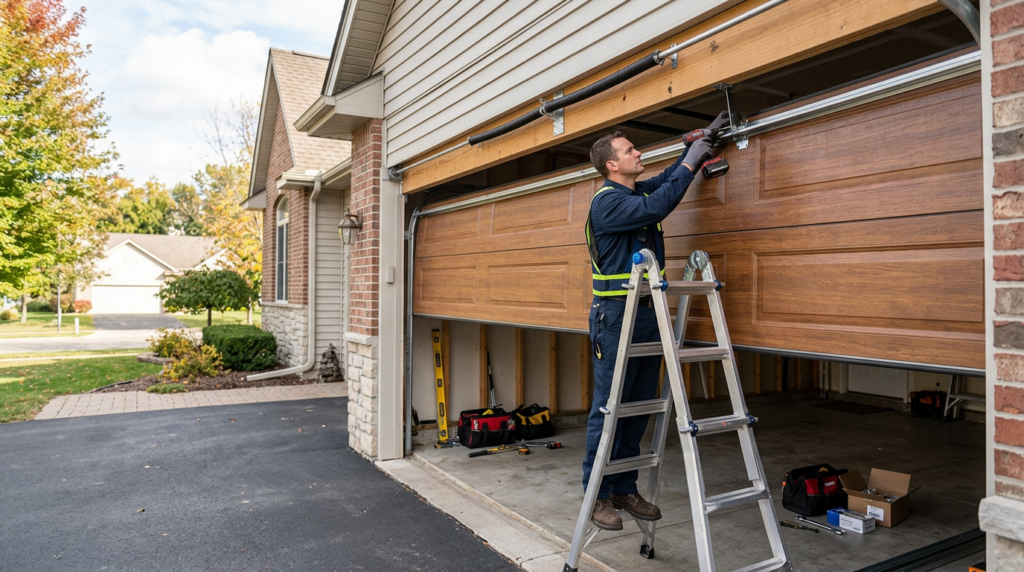
On-site, the work should start with a safety-focused inspection, not a sales pitch. A technician should check door balance (a properly balanced door stays near mid-height when disconnected), look for frayed lift cables, worn rollers, loose hinges, and bent tracks, and listen for grinding that points to bearing or roller failure. They should also test the opener’s safety reverse and photo-eye alignment, because a door that won’t reverse can be a real hazard.
If you’re searching specifically for a garage door contractor Hudson WI, ask one more practical question: “Do you stock common wear parts like rollers, hinges, sensors, and remotes, and can you source the correct spring size for my door weight?” The right spring matters because the opener is not designed to lift a “dead weight” door.
Hudson/WI Vetting Checklist Before You Schedule
Before you book, run a quick local checklist that protects you no matter who you hire. Ask: “Can you confirm you’re insured for this work?” and “Will you provide a written estimate or written scope before starting?” Getting the scope in writing helps prevent surprises like unapproved part swaps or add-on labor you didn’t agree to.
Also ask for warranty terms in writing: “What’s the parts warranty and what’s the labor warranty, and where will that be written on the invoice?” If the contractor uses subcontractors, ask: “Who is actually performing the work, and is that covered under the same insurance and warranty?”
For Wisconsin-specific peace of mind, you can do basic consumer checks without getting into legal territory: confirm the company’s name and contact info match what’s on the estimate, keep copies of the estimate/invoice, and look up general consumer-protection guidance from Wisconsin state resources if something feels off. If a contractor won’t provide basic business details in writing, choose someone else.
Repair Vs. Replace: Practical Decision Points
Repairs make sense when the door sections are solid and the issue is limited to wear parts like springs, rollers, cables, hinges, or an opener component. Replacement starts to make more sense if multiple panels are bent or rotted, the door is badly out of square, or you’re dealing with repeated failures that trace back to an undersized door system or chronic track damage.
Ask questions that force clarity: “Are you recommending replacement because of structural damage to the door sections, or because of parts availability?” and “If we repair today, what’s the likely next failure point?” Some older openers and specialty doors can be hard to match with compatible remotes, safety sensors, or control boards. In those cases, upgrading the opener (or occasionally the whole door system) can be more reliable than chasing discontinued parts.
Red Flags And Next Steps
Be cautious if someone won’t describe what they’re replacing, won’t test the safety reverse, or suggests DIY spring work. Torsion and extension springs store enough energy to cause serious injury; spring replacement is a professional job with the right tools and procedures. Another red flag is recommending a new opener because the door is heavy—often the door needs to be balanced and repaired so the opener isn’t overloaded.
Next steps: Get 2 written quotes that list parts and labor, ask for the spring wire size and cycle rating in writing if springs are replaced, confirm the warranty terms are written on the invoice, and have the technician demonstrate the photo-eye check and safety-reverse test after the repair before they leave.
Contact option: If you’d like help from a local pro, AA Garage Door is a nearby option to call.