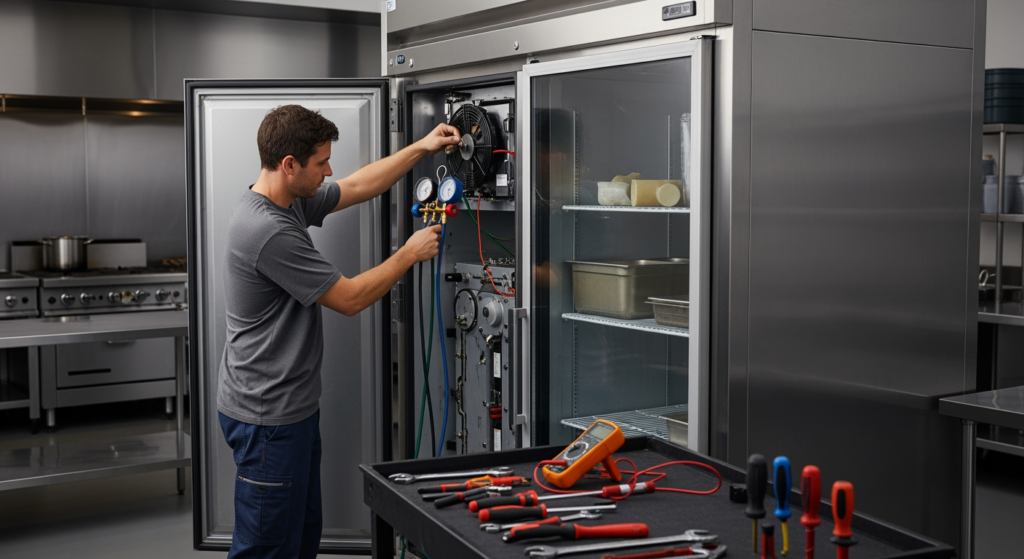
When I talk with local restaurant and grocery owners, the phrase Sun Prairie commercial refrigeration services comes up right away because refrigeration is the backbone of safe food handling and reliable operations. For context on environmental and safety expectations that affect refrigeration choices, the EPA explains a lot of why refrigerant handling and energy efficiency matter for businesses and communities across the country: https://www.epa.gov/.
Why reliable commercial refrigeration matters in Sun Prairie
In Sun Prairie, WI, whether you run a downtown cafe near Main Street or manage cold storage for a neighborhood grocer outside of town, refrigeration is more than just a closet with a compressor. It protects public health, controls inventory losses, keeps energy costs predictable, and ensures you meet state and federal codes. When cooling systems fail, the ripple effects are immediate: ruined product, interrupted service, and potential safety violations. I’ve seen businesses lose entire days of revenue because a critical unit went down without a fast, professional response.
Common local pain points I hear from business owners
Businesses in and around Sun Prairie face a mix of seasonal weather impacts, aging equipment, and staffing pressures that make refrigeration a recurring challenge. Common issues include irregular temperature control during hot summer months, compressor failures after years of heavy use, improper refrigerant charging, and the high cost of repairing older, inefficient systems. In a community close to Madison and with growing neighborhoods, uptime is essential for reputations and bottom lines.
What full-service commercial refrigeration looks like
When I evaluate vendors and solutions for local businesses, I look for a clear suite of services that covers both immediate needs and long-term performance. A strong service provider typically offers:
- 24/7 emergency repair to minimize spoilage and downtime
- Preventive maintenance plans that include cleaning, refrigerant checks, and performance tuning
- System retrofits and upgrades toward energy-efficient components
- Installation of walk-in coolers, freezers, display cases, and cold-room controls
These elements work together to reduce surprises. Preventive maintenance is especially valuable because it catches small issues before they become costly emergencies.
Preventive maintenance explained
Preventive maintenance isn’t a single visit; it’s a consistent process that keeps equipment in spec. During routine service, technicians should inspect condensers and evaporators, test control systems, assess defrost cycles, verify door seals, check refrigerant charge and pressures, and document temperature logs. Proper documentation helps businesses prove compliance with food-safety guidelines and can lower insurance risk.
Why preventive plans pay for themselves
Smaller, scheduled repairs are almost always cheaper than an emergency replacement. Scheduled maintenance extends equipment life, improves energy efficiency, and reduces the sudden loss of inventory. For many Sun Prairie operations, the uptime secured by a maintenance plan quickly offsets the annual cost of the service agreement.
Trends shaping commercial refrigeration in 2026
Here are two trends I’m watching that are shaping how businesses choose refrigeration solutions in this area.
1. Shift to low-global-warming-potential refrigerants
Regulatory pressure and manufacturer direction are pushing the industry toward refrigerants with lower global warming potential (GWP). This matters because changing refrigerants often requires retrofits, updated leak-detection systems, and certified technicians. Planning for these transitions can prevent surprise replacement costs and keep your operation compliant with future rules.
2. Smart controls and energy management
Internet-connected controllers and sensors now give operators real-time insights into temperatures, door openings, and energy use. For businesses in Sun Prairie, that means fewer late-night emergencies and better data for managers who want to spot inefficiencies. Smart systems can trigger alerts before food safety is jeopardized, and they often pay back through energy savings and reduced food waste.
How I recommend choosing a provider in the city
Not every company is the right fit for every operation. When you’re choosing a contractor for commercial refrigeration, verify these elements before you sign an agreement:
- License and certifications relevant to refrigerant handling and HVAC work
- Clear response times for emergency calls—ideally documented in writing
- References or case examples from similar businesses like restaurants, grocery stores, or healthcare facilities
- Transparent pricing for parts, labor, and service plans
Also ask whether the provider offers scheduled maintenance reminders and whether they maintain parts inventories that match the brands and models you use. In Sun Prairie and nearby communities, proximity can lower response time, so local presence is a real advantage.
Questions I always recommend asking
When you speak with a prospective vendor, these questions uncover capabilities and trustworthiness:
- How quickly do you respond to after-hours emergencies and what’s your average response time?
- Do your technicians have EPA Section 608 certification and manufacturer-specific training?
- What preventative maintenance items are included and how often are they performed?
- Can you provide references from businesses in Sun Prairie or the Madison metro area?
Immediate actions when a refrigeration unit fails
If you’re facing a refrigeration emergency, take calm, fast steps to save inventory and limit damage. I’ve seen small, decisive actions make a big difference during the first hour of a breakdown.
- Move perishable inventory to a backup unit or coolers if available, and prioritize items with the highest risk of spoilage.
- Close doors and limit access to the affected unit to maintain as much cold as possible.
- Turn off equipment if you suspect electrical issues or if a compressor is making abnormal noises; note what you observed for the technician.
- Call a certified commercial refrigeration technician immediately and provide model numbers and symptoms over the phone so they arrive prepared.
Cost considerations and the ROI of upgrades
Upgrading to modern, efficient refrigeration can look costly upfront but yields measurable returns. New compressors and improved insulation reduce energy use, while smart controls minimize compressor runtime and reduce door-open losses. I often compare the lifecycle cost—energy, maintenance, and expected replacement—rather than the purchase price alone when advising business owners.
Some solar and utility rebate programs and energy-efficiency incentives are available in parts of Wisconsin, which can reduce the upfront burden of upgrades. Check with your local utility for current offers; combining incentives with maintenance savings can shorten the payback interval considerably.
Real-world scenarios I’ve helped solve
I’ve worked with a bakery just off Main Street that faced repeated freeze-thaw cycles because a legacy unit struggled through summer heat. A phased retrofit replaced the failing compressor, upgraded the defrost controls, and added a remote temperature monitor. The bakery saw fewer product losses and a visible drop in energy use within months.
Another example involved a small grocery near a busy neighborhood corridor. They added smart case controllers and trained staff on door management. The result was lower energy bills, fewer surprise trips from technicians, and a measurable reduction in produce spoilage.
How to get the most value from services
To maximize ROI and reliability, treat refrigeration as a managed asset: document maintenance history, set performance benchmarks, and hold technicians to response-time commitments. I recommend a simple filing system—digital is best—where temperature logs, service visits, and parts replacements are easy to retrieve. Good records not only help with troubleshooting but also support warranty claims and insurance needs.
Final thoughts and next steps
If you operate a restaurant, food truck, grocery, or any business that depends on cold storage in Sun Prairie, a proactive approach to refrigeration pays off in lower energy costs, fewer emergencies, and safer product handling. Start by auditing current equipment, ask prospective vendors the right questions, and prioritize preventive maintenance. For fast, reliable service and expertise tailored to the Sun Prairie area, consider reaching out to Nextech North America to discuss a plan that keeps your business cool and compliant.